



Executive Summary
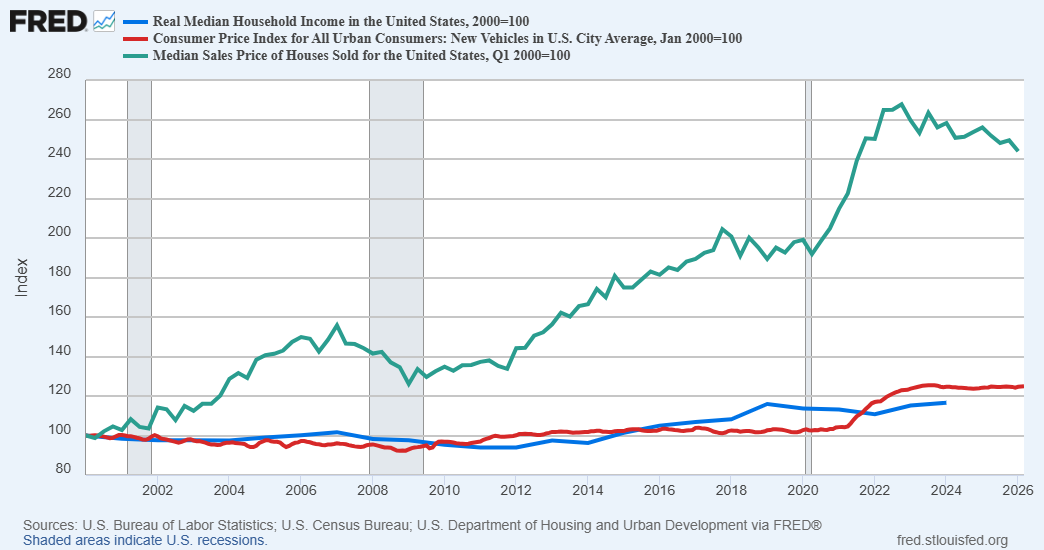
While the stock market continues reaching new highs, one would think consumers would also be doing well. However, according to the most recent University of Michigan Consumer Sentiment Index (first graph), the reading is below the start of every recession back to 1975. The post-Covid skyrocketing prices of new cars and houses are challenging for consumers whose incomes have not kept pace. In the fourth graph below, one can see the comparison of median home prices and median new vehicle prices compared to the Real Median Household income back to 2000. Consumers are taking on additional debt to keep pace with the rising costs. And the last graph shows how consumers are falling behind on various debts – especially car loans and credit card loans – approaching levels last seen in the Financial Crisis. In conclusion, the consumer appears to be struggling while the stock market is not reflecting the struggle.
For further analysis, continue to read The Details below for more information.
“The man who is a pessimist before 48 knows too much; if he is an optimist after it he knows too little.”
–Mark Twain
The Details
Many people believe that since the stock market is at an all-time high, in the most overvalued speculative market in history, the economy must be strong. At the same time, when surveyed about their confidence in their personal financial situation, business conditions, the economy and buying conditions, the result is the worst on record. This is primarily due to the high cost of goods and services, especially the rising price of gasoline. Consumer pessimism suggests that consumer spending will be weak. Since consumer spending constitutes two-thirds of economic growth, this would indicate a slowdown in the economy. Notice in the graph below from Vetta-Fi that the current Consumer Sentiment reading is below the start of every prior recession since 1975. And that includes the recession following the bursting of the Tech Bubble, and also the Great Recession and Financial Crisis.
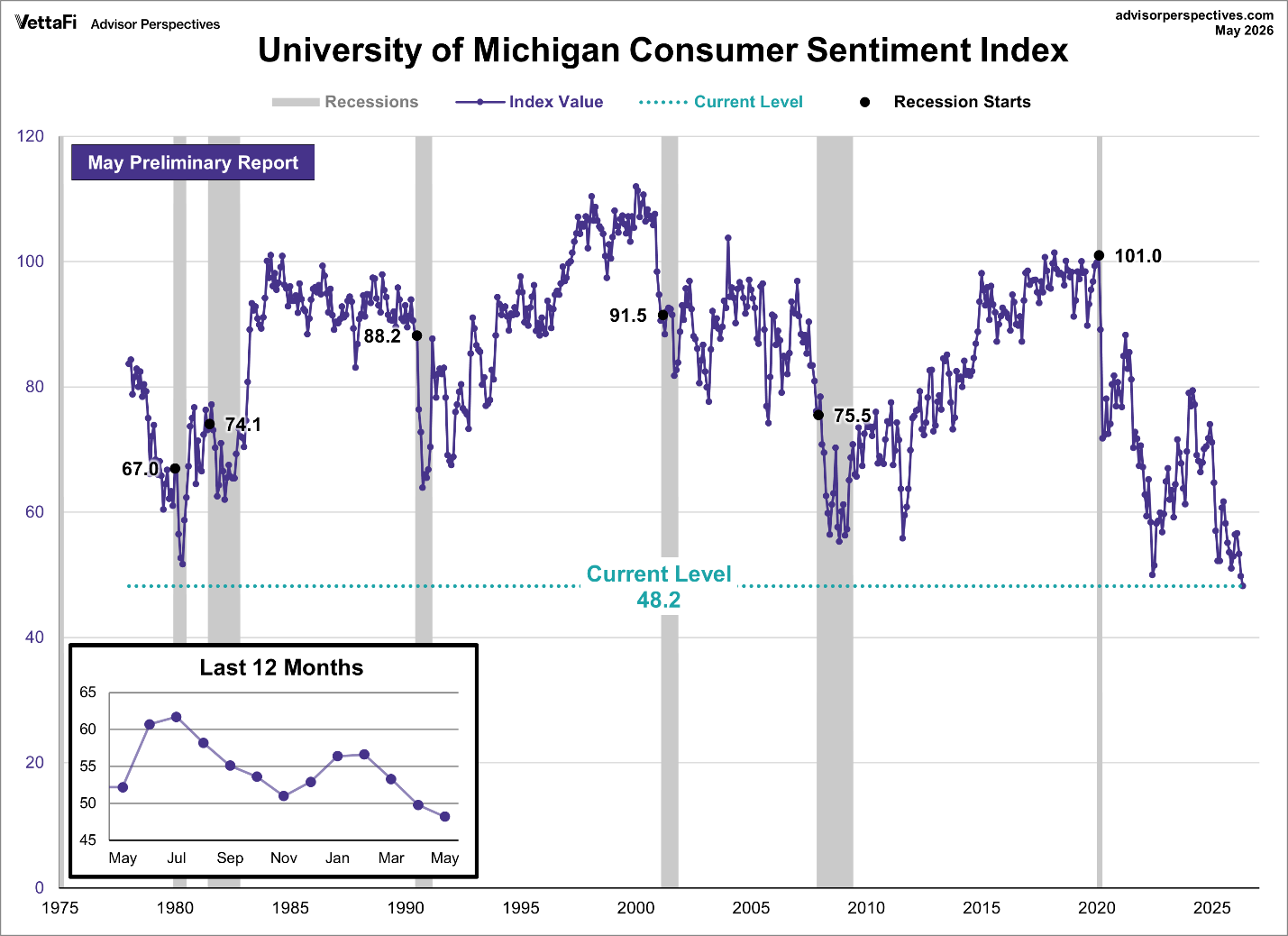
It is apparent that we live in a bifurcated world. One where speculators throw caution to the wind when betting on stock prices, while the majority of consumers are struggling and are concerned about the future.
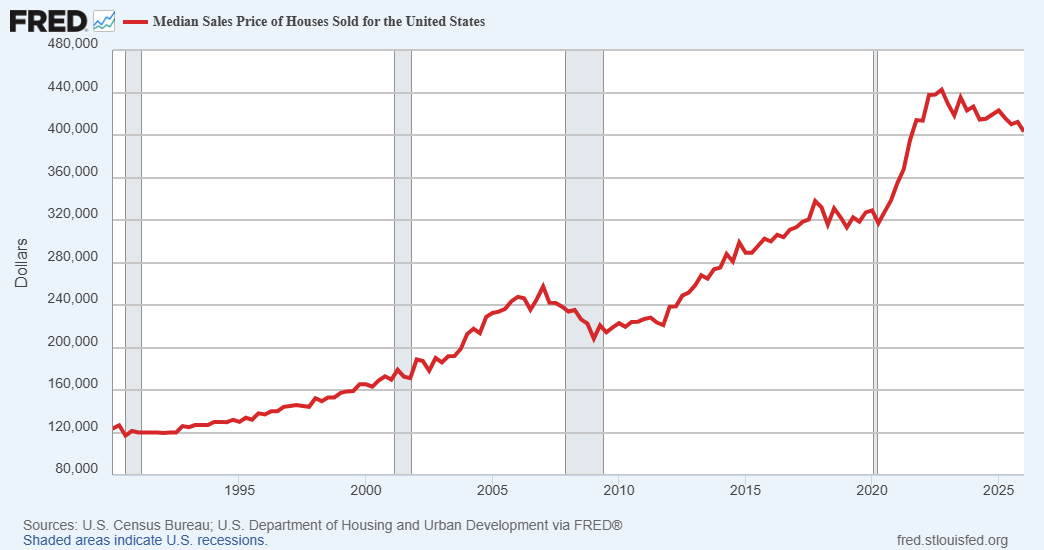
The post-Covid inflation surge, attributable to the massive increase in stimulus and money creation, pushed the cost of high dollar items, such as new cars and houses, out of reach for many households. Some have relented and made purchases by borrowing funds, even though interest rates remain high. The following two graphs show the increase in new car and home prices. The average cost of a new car has jumped to over $49,000, while the median sales price on homes is over $403,000.
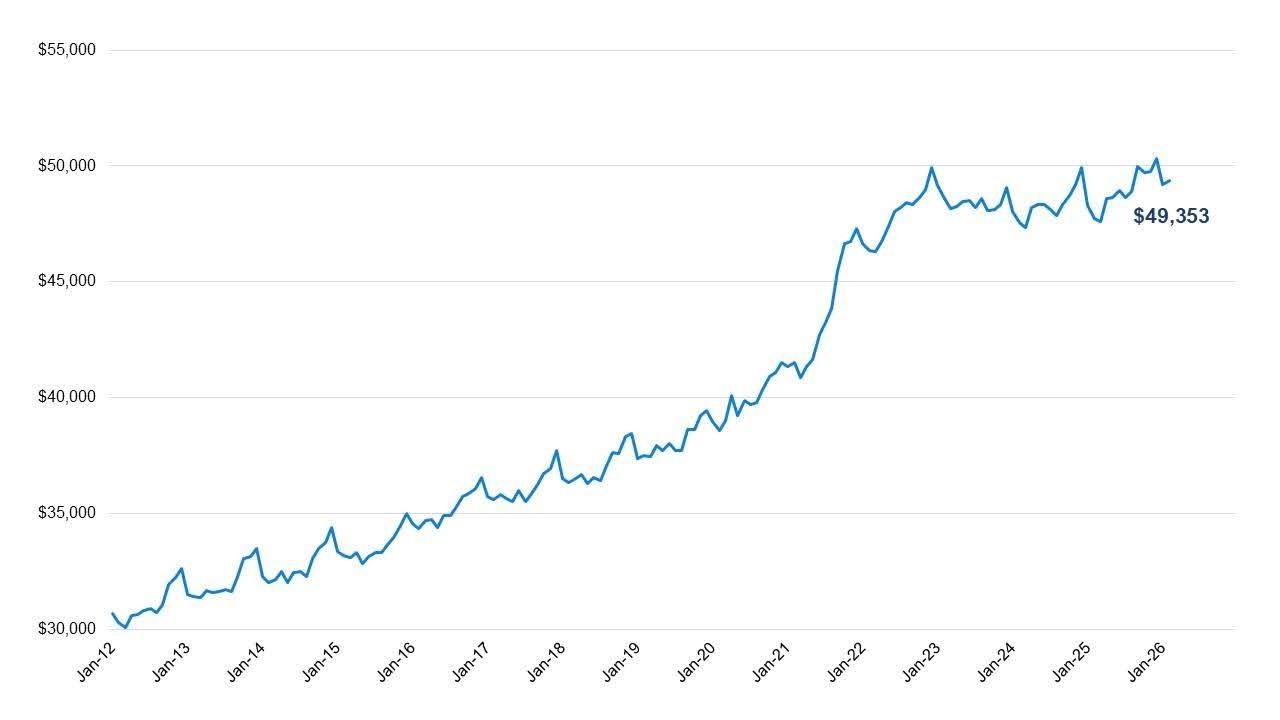
Source: Cox Automotive
The graph below illustrates how unaffordable housing (green line) has become, as prices have grown exponentially faster than real median household income (blue line). While car prices (red line) have outpaced incomes, they do not even compare to the divergence in home prices.
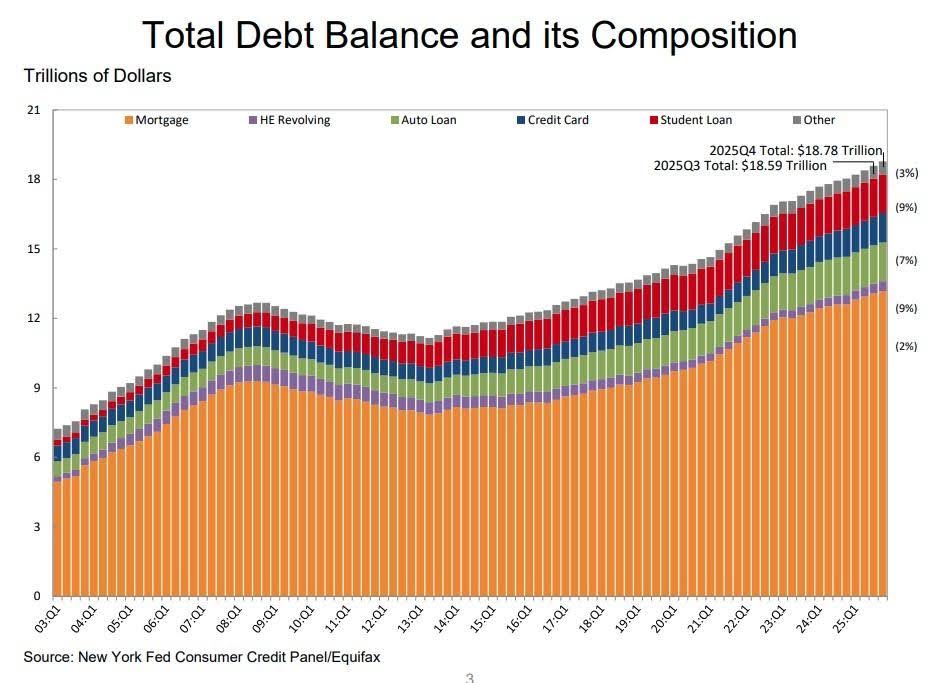
As consumers struggle with higher prices, they are resorting to debt to make ends meet. The graph below from the New York Fed illustrates the change in consumer debt by category. While total debt is growing, the categories growing the fastest include student loans, auto loans and credit card balances.
After a brief respite, payments are once again required on student loans, sending delinquencies soaring. The graph below, also from the NY Fed, breaks down by category the balance of loans 90+ days delinquent. Notice the surge in student loans (red line). Also worth noting is that credit card and auto loan delinquencies are approaching the peaks reached during the Financial Crisis.
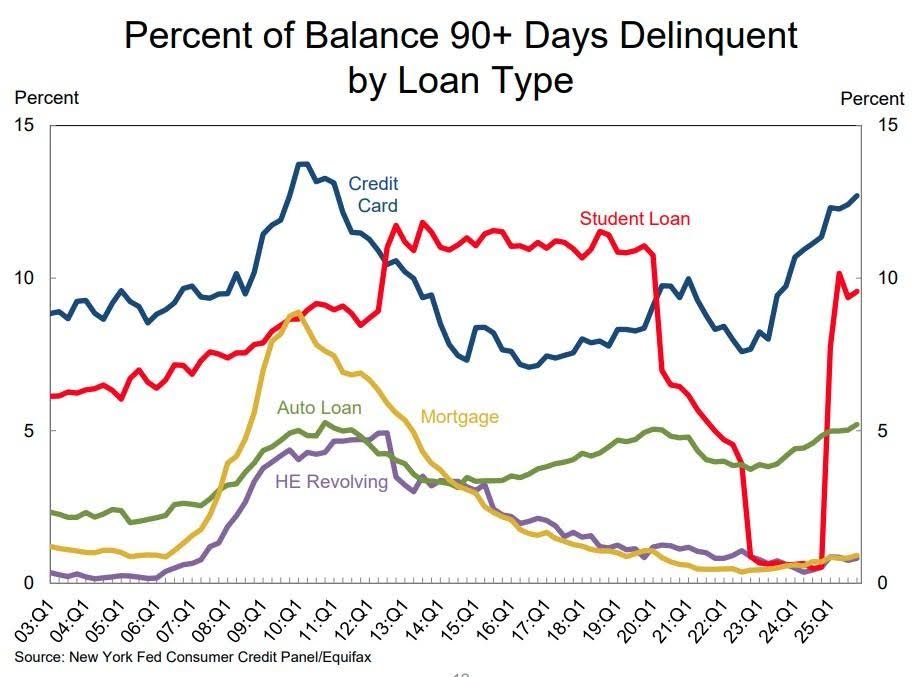
Higher interest rates are contributing to consumers’ lack of ability to service their outstanding debts. The gambling in the stock market will continue as long as speculators have a stomach for risk. Once that changes, the subsequent correction could be dramatic and swift. In the meantime, average households are struggling and, according to the University of Michigan Consumer Sentiment Index, are more concerned about their future than any time since the survey began in 1952.
It is unlikely that gasoline prices will drop significantly for some time. If the current sentiment reading is an indicator of upcoming consumer spending, it is highly likely that spending, and therefore, economic growth, will slow further. Future policy changes impacting inflation and interest rates will contribute, one way or the other, to consumers’ outlook. The fact that consumer sentiment is at an all-time low is not a positive indicator for economic activity. We will continue to monitor changes in policy, sentiment and activity. Currently, the stock market and the consumer are out of sync.
The S&P 500 Index closed at 7,399, up 2.3% for the week. The yield on the 10-year Treasury Note fell to 4.36%. Oil prices decreased to $95 per barrel, and the national average price of gasoline according to AAA rose to $4.52 per gallon.
© 2026. This material was prepared by Bob Cremerius, CPA/PFS, of Prudent Financial, and does not necessarily represent the views of other presenting parties, nor their affiliates. This information should not be construed as investment, tax or legal advice. Past performance is not indicative of future performance. An index is unmanaged and one cannot invest directly in an index. Actual results, performance or achievements may differ materially from those expressed or implied. All information is believed to be from reliable sources; however we make no representation as to its completeness or accuracy.
Securities offered through Registered Representatives of Cambridge Investment Research, Inc., a broker/dealer, member FINRA/SIPC. Advisory services offered through Cambridge Investment Research Advisors, Inc., a Registered Investment Advisor. Prudent Financial and Cambridge are not affiliated.
The information in this email is confidential and is intended solely for the addressee. If you are not the intended addressee and have received this message in error, please reply to the sender to inform them of this fact.
We cannot accept trade orders through email. Important letters, email or fax messages should be confirmed by calling (901) 820-4406. This email service may not be monitored every day, or after normal business hours.