



Executive Summary
In this conclusion of the series on Currency Debasement (Part 5), I will cover what it would take to have a currency collapse and high inflation. Collapse of the U.S. dollar could occur through widespread loss of confidence in both the Federal Government’s and the Federal Reserve Bank’s ability to control debasement. If U.S. deficits explode higher due to any shock such as recession or war, and the response is endless QE to monetize debt, combined with the decision to boost the economy rather than fight inflation, then the result could be a loss of confidence. This could expand to an international loss of confidence, including the sale of U.S Treasuries (typically a safe haven) and investors turning to gold and foreign investments. Also, if investors spend money before prices rise due to inflation, it could create an inflationary doom loop. Below are bullet points to monitor as well as graphs to observe. While not wanting to overstate risks, be aware of any future warning signs.
For further analysis, continue to read The Details below for more information.
“Confidence is contagious. So is lack of confidence.”
–Vince Lombardi
The Details
I decided to write this series on currency debasement for several reasons. First, to highlight how dramatically the dollar has lost its purchasing power due to inflation (Part 1). Second, to explain the main causes of domestic inflation (Parts 2 & 3). Third, to provide a brief overview of how foreign currency exchange can impact the value of the dollar, and what it means to be the reserve currency for the world (Part 4). And finally, in this conclusion, I will attempt to describe what it would take to have a currency collapse and extremely high inflation.
For the dollar to collapse, resulting in dangerously high inflation, would require a complete loss of confidence in the Federal government’s and the Federal Reserve Bank’s (Fed’s) ability to control the debasement. Domestically, this would include Federal deficits exploding even higher, due to a deep recession, war, or other reasons, requiring the Fed to monetize the deficits through a massive QE (Quantitative Easing) program. If it appeared that the program would be forced to continue indefinitely in order to fund government spending, this would add to the loss of public confidence. Typically, during a recession disinflation appears due to a lack of spending as the economy weakens and job losses increase. However, the implementation of endless QE, sending the money supply soaring, could instill inflation fears as the Fed chooses to fight the economic weakness over inflation.
If investors fear inflation, they could sell long-term Treasuries, pushing yields higher, despite the Fed’s QE program. The battle between a flight to safety versus fear of inflation will determine if confidence is lost. If investors maintain confidence in the Fed, they will buy Treasuries as a safe haven during the storm. If they lose confidence, they will flee Treasuries for gold and foreign investments.
If consumers lose confidence, and fear prices will rise rapidly, at some point, they could choose to spend before prices rise further, thus reinforcing the price increases and creating a doom loop. The rise in long-term interest rates added to the rising deficits creates an upward debt spiral, pushing total debt-to-GDP into dangerous territory.
If domestic consumers and investors lose confidence, the loss of confidence would spread internationally. If foreigners become concerned about the U.S. fiscal predicament, they could choose to invest their capital elsewhere. The U.S. might be forced to implement capital controls to slow the flight of funds to other countries. It is the loss of confidence in the dollar that would lead to dangerously high inflation and potentially a currency collapse.
Lately, more and more pundits have spoken about the dollar being on the verge of collapse. Most of these “experts” have some vested interest in investing in gold. Although, gold would be a good place to be if the currency collapsed. Currently, overall confidence in the dollar remains strong. This could change relatively quickly. To monitor the progression of a potential crisis, watch for these things:
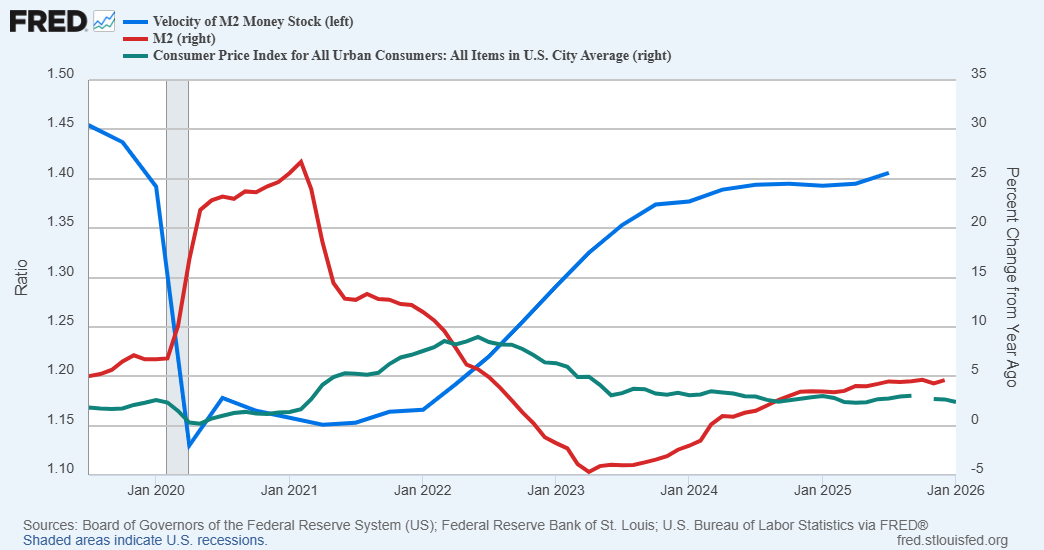
- Sharp rise in the money supply (M2)
- Corresponding rise in the velocity of M2
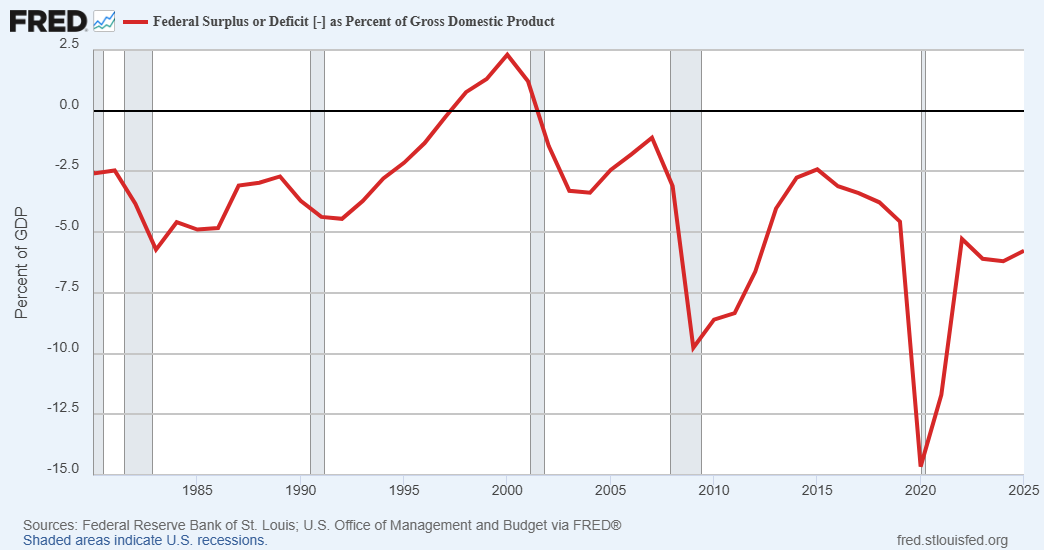
- Consistent deficits over 8% of GDP
- Fed forced to implement extended QE
- Implementation of capital controls
- Low short-term rates, and rising long-term rates
- Negative real rates
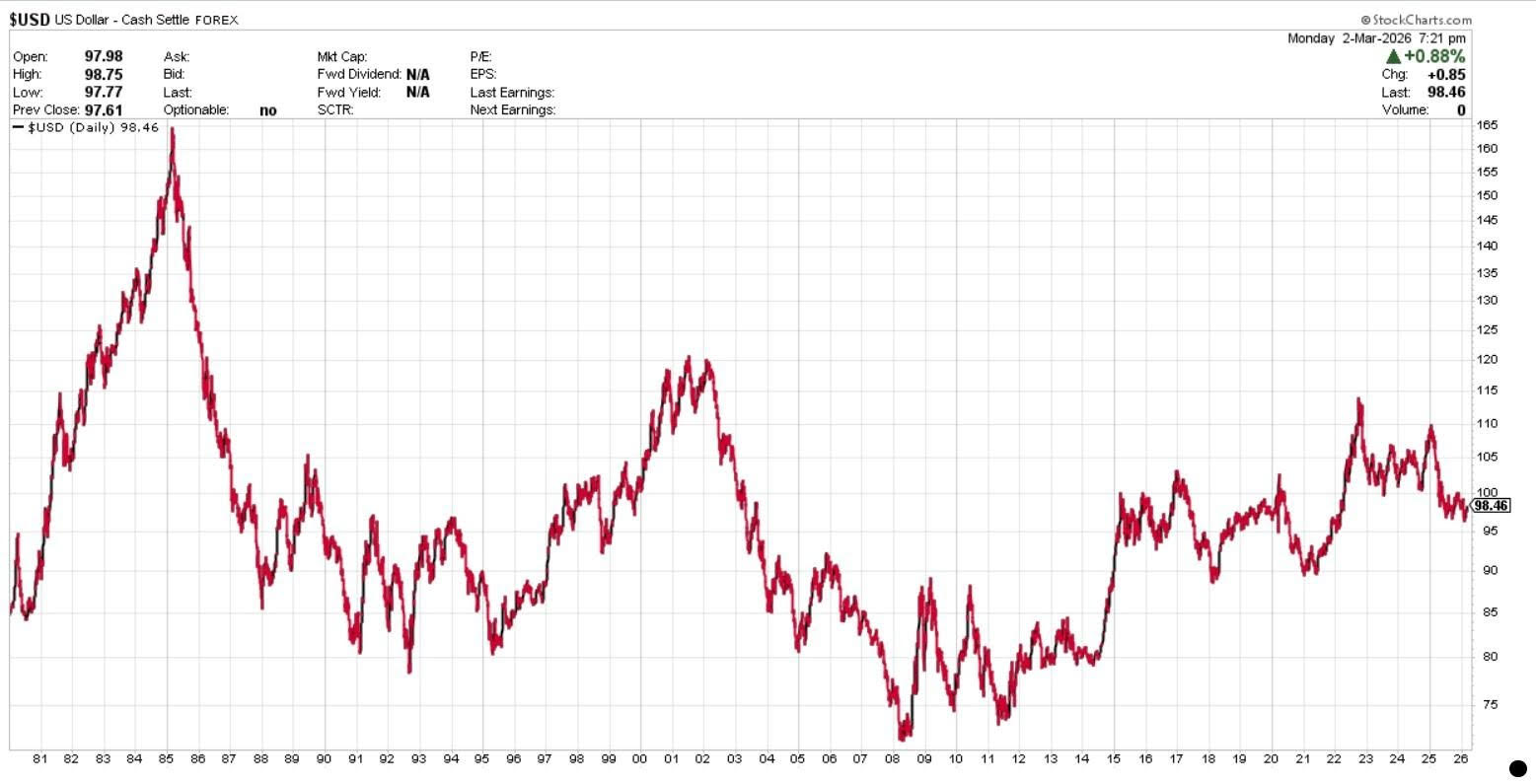
- Large drop in the dollar index
- Foreign central banks choosing other assets besides Treasuries
- Reduction in foreign capital investments
- Lack of confidence in the Fed
If a few of these occur, it might give investors and consumers pause, but if they were all to occur simultaneously, then the situation could become more dire. Up to this point, the U.S., despite its weaknesses, has been the strongest economy in the world. If the U.S. is struggling, then other countries are probably struggling too. If, or when, other countries fear investing in the U.S., then the outcome could be different.
The following graphs are important to monitor:
M2, Velocity and Inflation (CPI)
Deficit-to-GDP Ratio
Dollar Index
I hope this series on Currency Debasement has been informative. While I have barely scratched the surface on this topic, hopefully, the tools provided give you some comfort that the risk factors relevant to a currency crisis can be monitored. Of course, I too will be monitoring these elements and will write further about them as warranted.
The S&P 500 Index closed at 6,879, down 0.4% for the week. The yield on the 10-year Treasury Note fell to 3.96%. Oil prices increased to $67 per barrel, and the national average price of gasoline according to AAA rose to $2.98 per gallon.
© 2026. This material was prepared by Bob Cremerius, CPA/PFS, of Prudent Financial, and does not necessarily represent the views of other presenting parties, nor their affiliates. This information should not be construed as investment, tax or legal advice. Past performance is not indicative of future performance. An index is unmanaged and one cannot invest directly in an index. Actual results, performance or achievements may differ materially from those expressed or implied. All information is believed to be from reliable sources; however we make no representation as to its completeness or accuracy.
Securities offered through Registered Representatives of Cambridge Investment Research, Inc., a broker/dealer, member FINRA/SIPC. Advisory services offered through Cambridge Investment Research Advisors, Inc., a Registered Investment Advisor. Prudent Financial and Cambridge are not affiliated.
The information in this email is confidential and is intended solely for the addressee. If you are not the intended addressee and have received this message in error, please reply to the sender to inform them of this fact.
We cannot accept trade orders through email. Important letters, email or fax messages should be confirmed by calling (901) 820-4406. This email service may not be monitored every day, or after normal business hours.